





Introduction
Your online store can have the best products, stunning design, and unbeatable pricing—but if your website is slow, crashes during sales, or scares customers away with poor security, none of it matters.
Choosing the best hosting for online stores in 2026 is no longer just a technical decision—it’s a revenue decision.
Imagine losing dozens of customers during Black Friday because your hosting couldn’t handle traffic spikes. Or watching shoppers abandon their carts because your pages took 5 seconds too long to load.
Painful, right?
The truth is, your hosting provider directly affects your speed, SEO rankings, customer trust, and most importantly—your conversions.
That’s why we created this guide to help you find the most powerful, fast, and conversion-boosting hosting solutions you simply can’t ignore.
Let’s dive in.
Why Choosing the Best Hosting for Online Stores Matters
Your hosting impacts far more than uptime.
It affects:
- Website loading speed
- Checkout performance
- Search engine rankings
- Mobile shopping experience
- Security and PCI compliance
- Customer trust
- Conversion rates
- Revenue growth
In short, great hosting helps you sell more.
Bad hosting does the opposite.
What to Look for in eCommerce Hosting in 2026
Before choosing a provider, prioritize these features:
1. Lightning-Fast Performance
Shoppers hate waiting.
Look for:
- SSD or NVMe storage
- CDN integration
- Server-side caching
- LiteSpeed or cloud infrastructure
- Global data centers
2. Strong Security Features
Security is non-negotiable.
You need:
- Free SSL certificates
- Malware protection
- DDoS defense
- Daily backups
- Firewall protection
- PCI compliance support
3. Scalability
Your store should grow without hosting limitations.
Choose hosting that supports:
- Traffic spikes
- Seasonal promotions
- Product expansion
- Multi-store management
4. Platform Compatibility
Ensure support for:
- WooCommerce
- Shopify alternatives
- Magento
- PrestaShop
- OpenCart
- BigCommerce integrations
5. Excellent Support
When your store breaks, every minute costs money.
Look for:
- 24/7 live chat
- Phone support
- Expert WooCommerce/Magento assistance
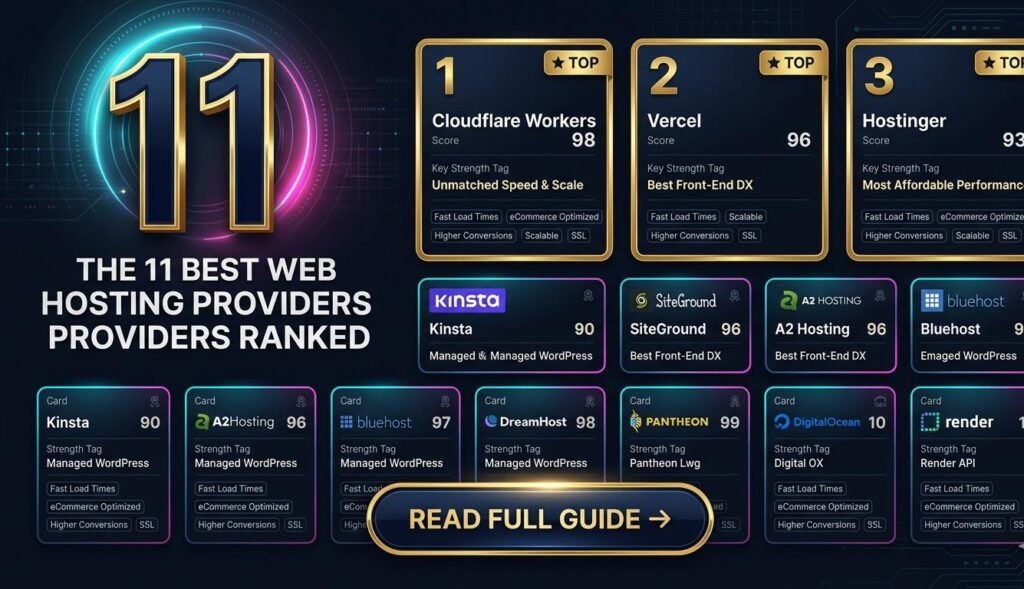
11 Best Hosting for Online Stores in 2026
1. SiteGround – Best Overall Hosting for Online Stores
Why It Stands Out
SiteGround combines speed, security, and exceptional support—making it ideal for growing eCommerce brands.
Key Features
- Managed WooCommerce hosting
- Free SSL + CDN
- Daily backups
- Advanced caching
- Google Cloud infrastructure
- 99.99% uptime
Best For
Small to medium online stores that need reliable performance.
2. Bluehost – Best for Beginners
Why It Stands Out
Perfect for first-time store owners who want simplicity without sacrificing quality.
Key Features
- One-click WooCommerce setup
- Free domain
- Free SSL
- Beginner-friendly dashboard
- 24/7 support
Best For
New entrepreneurs launching their first online store.
3. Hostinger – Best Budget Hosting for Online Stores
Why It Stands Out
Affordable pricing with surprisingly strong speed performance.
Key Features
- LiteSpeed servers
- Free SSL
- Weekly backups
- Managed WordPress tools
- AI website tools
Best For
Budget-conscious startups.
4. Cloudways – Best for High Performance
Why It Stands Out
Cloud hosting with elite speed and advanced control.
Key Features
- DigitalOcean, AWS, Google Cloud options
- Dedicated resources
- Built-in caching
- Free migration
- Advanced performance optimization
Best For
Serious store owners scaling aggressively.
5. WP Engine – Best Premium WooCommerce Hosting
Why It Stands Out
Enterprise-level WordPress hosting built for high conversions.
Key Features
- Premium speed optimization
- Managed WooCommerce tools
- Security monitoring
- Daily backups
- Developer-friendly environment
Best For
Established brands and premium stores.
6. A2 Hosting – Best for Speed
Why It Stands Out
Turbo servers designed for ultra-fast page loads.
Key Features
- Turbo boost performance
- Free SSL
- NVMe storage
- Advanced caching
- Free migration
Best For
Stores focused heavily on page speed.
7. Nexcess – Best Managed eCommerce Hosting
Why It Stands Out
Excellent for WooCommerce and Magento users.
Key Features
- Auto-scaling
- Managed updates
- Performance monitoring
- PCI compliance support
- Built-in CDN
Best For
High-volume online stores.
8. Kinsta – Best Cloud Hosting for WooCommerce
Why It Stands Out
Premium managed hosting powered by Google Cloud.
Key Features
- Isolated container technology
- Automatic scaling
- Daily backups
- Security guarantees
- Fast support
Best For
Luxury brands and fast-growing eCommerce businesses.
9. DreamHost – Best for Long-Term Value
Why It Stands Out
Transparent pricing and dependable performance.
Key Features
- SSD storage
- Free SSL
- Automated backups
- Strong uptime
- Simple control panel
Best For
Store owners wanting predictable pricing.
10. InMotion Hosting – Best VPS for Online Stores
Why It Stands Out
Excellent VPS solutions for stores needing dedicated resources.
Key Features
- Managed VPS hosting
- Free migrations
- Strong security
- Scalable plans
- Excellent support
Best For
Growing stores outgrowing shared hosting.
11. ScalaHosting – Best Emerging Hosting Choice
Why It Stands Out
A hidden gem with excellent cloud VPS options.
Key Features
- Managed cloud VPS
- Real-time security monitoring
- Free migrations
- SPanel control panel
- High uptime
Best For
Businesses wanting VPS performance without complexity.
Quick Comparison Table
| Hosting Provider | Best For | Starting Strength |
|---|---|---|
| SiteGround | Overall Best | Speed + Support |
| Bluehost | Beginners | Easy Setup |
| Hostinger | Budget Stores | Low Cost |
| Cloudways | Performance | Cloud Power |
| WP Engine | Premium Stores | Enterprise Quality |
| A2 Hosting | Speed | Turbo Servers |
| Nexcess | Managed eCommerce | Auto Scaling |
| Kinsta | Cloud WooCommerce | Premium Infrastructure |
| DreamHost | Long-Term Value | Reliable Pricing |
| InMotion | VPS Hosting | Dedicated Resources |
| ScalaHosting | Cloud VPS | Strong Security |
Shared Hosting vs VPS vs Cloud Hosting
Shared Hosting
Pros
- Cheap
- Easy to manage
Cons
- Slower performance
- Limited resources
Best For
Very small stores
VPS Hosting
Pros
- Better performance
- Dedicated resources
Cons
- Higher cost
Best For
Growing businesses
Cloud Hosting
Pros
- High scalability
- Excellent uptime
- Great speed
Cons
- Premium pricing
Best For
Serious eCommerce brands
Pro Tips to Improve Store Performance Beyond Hosting
Even the best hosting for online stores works better with smart optimization.
Do This:
- Compress product images
- Use a CDN
- Install caching tools
- Remove unnecessary plugins
- Optimize checkout pages
- Use lazy loading
- Enable database optimization
These small improvements create massive conversion gains.
Conclusion
Your hosting provider is not just where your website “lives.”
It’s the foundation of your sales, customer experience, and long-term growth.
Choosing the best hosting for online stores in 2026 means choosing faster speed, stronger security, better SEO rankings, and higher conversions.
If you’re serious about scaling your store, don’t settle for average hosting.
Start with the right platform—and let your business grow without limits.
Which hosting provider are you considering for your store?
Drop your thoughts in the comments, share this guide with fellow entrepreneurs, and help others choose smarter hosting in 2026.
FAQ: Best Hosting for Online Stores
1. What is the best hosting for online stores in 2026?
The best hosting for online stores depends on your needs, but SiteGround, Cloudways, and Kinsta are among the top choices for speed, security, and conversions.
2. Is shared hosting good for online stores?
Shared hosting works for very small stores, but growing businesses should move to VPS or cloud hosting for better speed and reliability.
3. Which hosting is best for WooCommerce stores?
SiteGround, WP Engine, Kinsta, and Nexcess are excellent WooCommerce hosting providers because they offer optimized performance and strong security.
4. Does hosting affect SEO for online stores?
Yes. Fast loading speed, uptime, and security all directly impact SEO rankings. Better hosting improves user experience and search visibility.
5. How much should I spend on hosting for an online store?
Small stores may start with budget hosting, but serious eCommerce businesses should invest more for performance, security, and scalability. Cheap hosting often costs more in lost sales.
Leave a Reply